Book Review of To Kill a Mockingbird
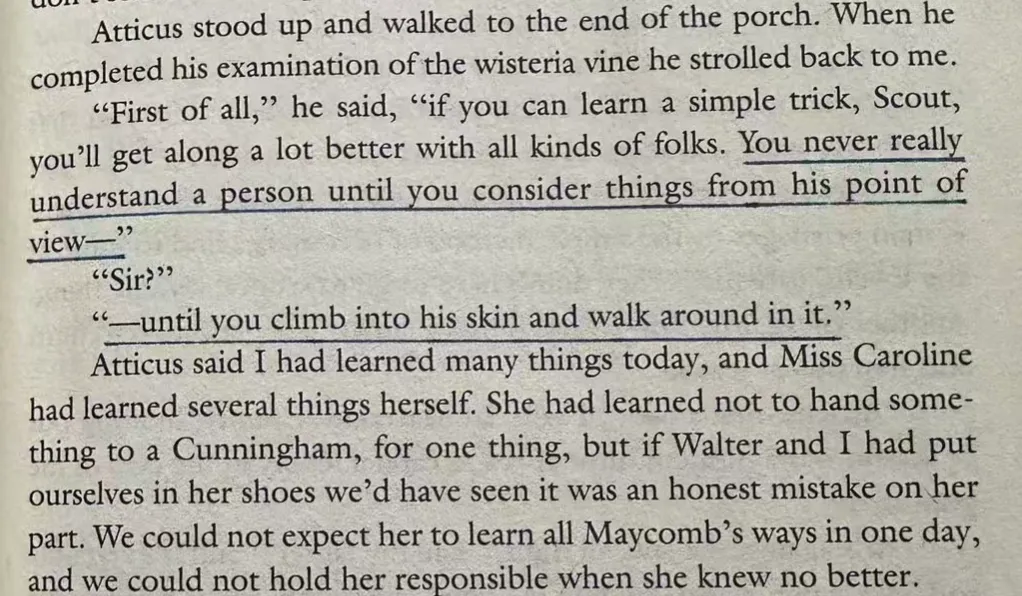
You never really understand a person until you climb into his skin and walk around in it.
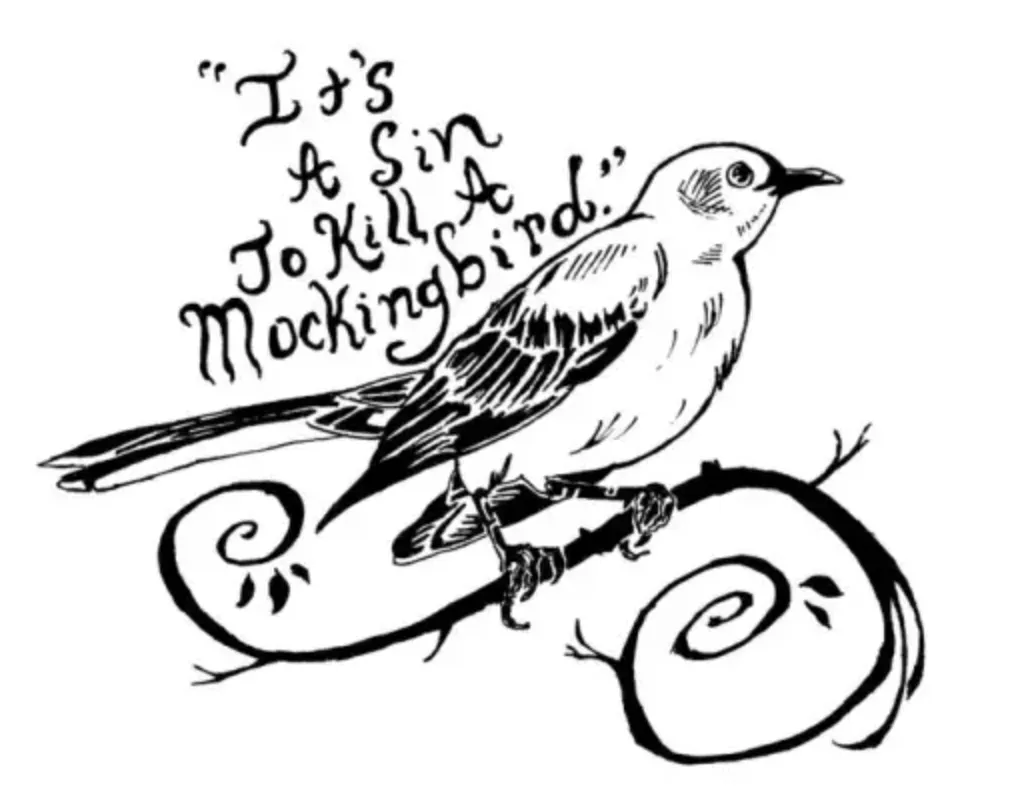
Written from the perspective of a young girl named Scout, this novel is set in a small Southern town during the Great Depression of the 1930s. The girl’s father, Atticus Finch, is a lawyer, and when he decides to defend Tom, a black man who has been falsely accused, the family’s life is completely transformed. But the core of the novel is not to dwell on the darkness of racial discrimination or the cruelty of social injustice; rather, it guides readers to ask: What is the essence of kindness? How resilient is the power of conviction? Why do hatred and prejudice spread so easily? More importantly, it reveals to every adult how to become a role model in a child’s eyes and how to protect their pure convictions.
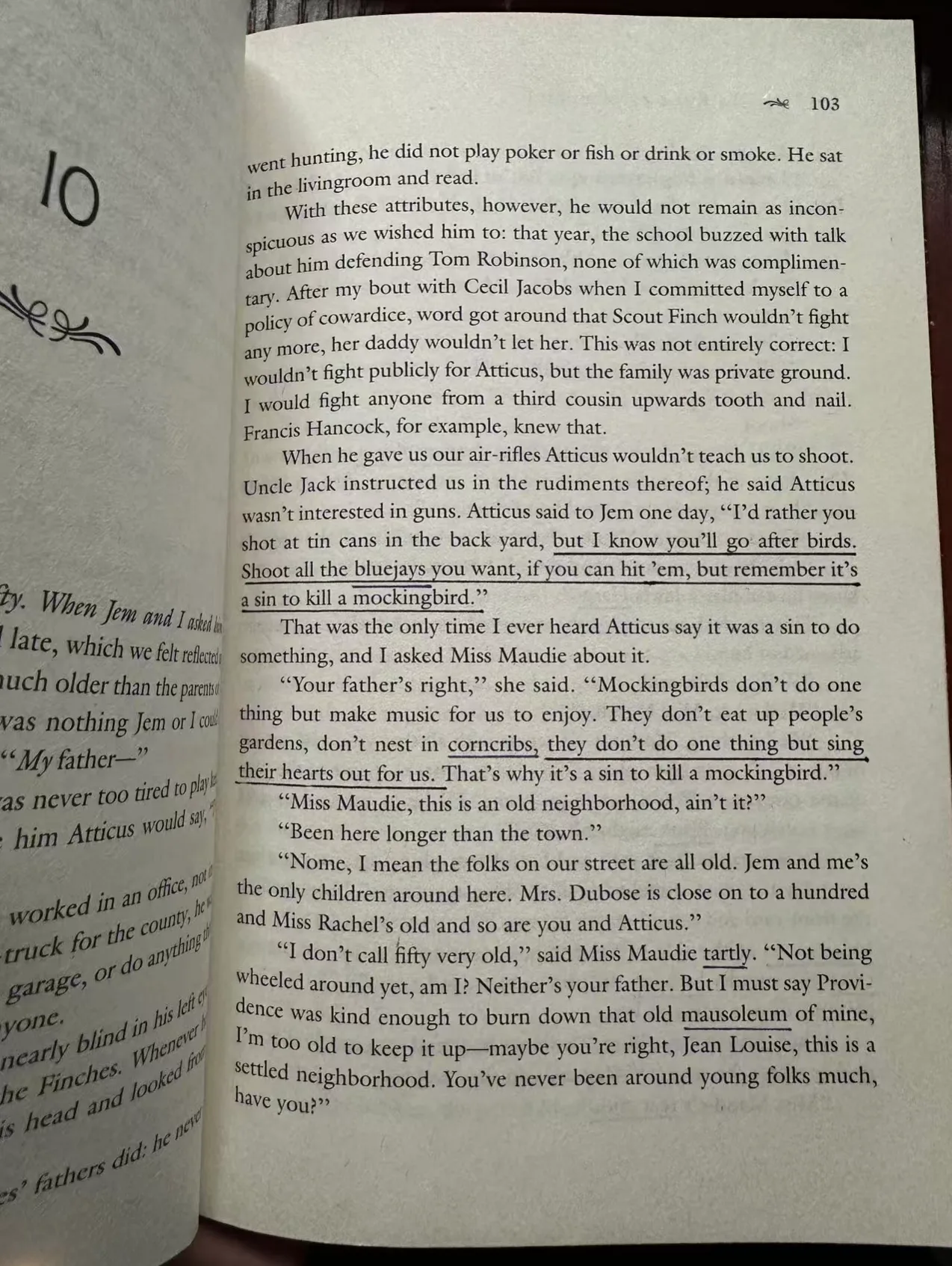
“Robins sing only for us; they never do anything wrong. They don’t steal fruit from the garden, nor do they build nests in the barn—they simply sing with all their hearts.” “You can shoot a bluebird,” his father told the children, “but remember, killing a robin is a sin.” This was the first time Scout truly understood the meaning of “sin.” Later, facing an elderly woman who was fighting with all her might to overcome her drug addiction, Father explained the meaning of “bravery” to his son who had made a mistake: “True bravery isn’t holding a gun; it’s knowing you’ll lose, yet choosing to set out anyway and seeing it through to the end. You rarely win, but sometimes you do.”
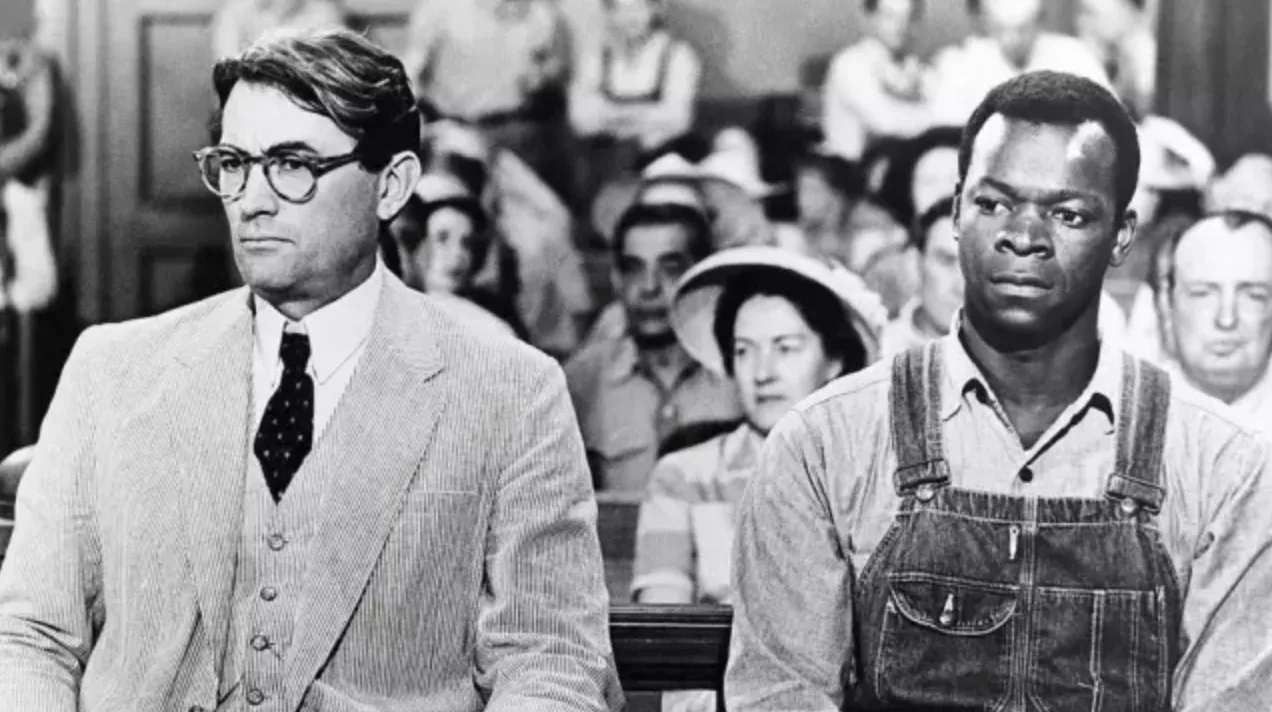
The most moving chapter in the novel is the entire process of Atticus defending Tom. From the very beginning, everyone knew this case had no chance of success—in a small town where racial prejudice ran deep, a Black man’s innocence stood no chance against accusations from white people. His son Jem was furious at the jury’s verdict, but Atticus calmly told him, “You’ve lived your life so far without ever going against logic, but in this world, there are some things that make people lose their reason—things that can never be fair, no matter what. These realities are ugly, but we must face them head-on.” His daughter, Scout, asked in confusion, “Then why do you do it?” Her father’s reply rang out with conviction: “Just because we’ve been losing for a hundred years doesn’t mean we give up the right to fight for victory. Before I can face others with a clear conscience, I must first be able to face myself. There is one thing that must never conform to the crowd, and that is—a person’s conscience.”
Behind this lies an even warmer reason: he was the father of two children. In the eyes of their nanny, Calpurnia, and their neighbors, Atticus “was always the same at home as he was in court.” He knew full well that the first person a child looks up to is their father, and that every choice he made shaped his children’s understanding of the world. “Sometimes I feel like I’m not a good enough parent, but I am their whole world. Before they look up to anyone else, they look up to me first. I want to be a man of integrity so I can meet their gaze with a clear conscience… If I turn a blind eye to injustice, I’ll never be able to look them in the eye again. Once I lose that trust, I’ll lose them forever—and they are my everything.”
While rereading this book, I suddenly noticed a quote from Charles Lamb on the title page: “A lawyer, I suppose, was once a child too.” This line reminded me of a poem by Hai Sang: “Young Hitler, I imagine, must have been very adorable as well.” We’re so used to labeling Hitler as a “devil” and assuming lawyers are the “embodiment of justice,” yet we forget that they were all once innocent children who enjoyed carefree, innocent childhoods.